


Workplace fraud remains one of the biggest risks for Philippine businesses, especially SMEs and accounting clients. The Fraud Tree—a global classification system by the Association of Certified Fraud Examiners (ACFE)—helps firms like Account It Right identify, categorize, and prevent fraud before it causes financial and reputational damage.
What Is the Fraud Tree?
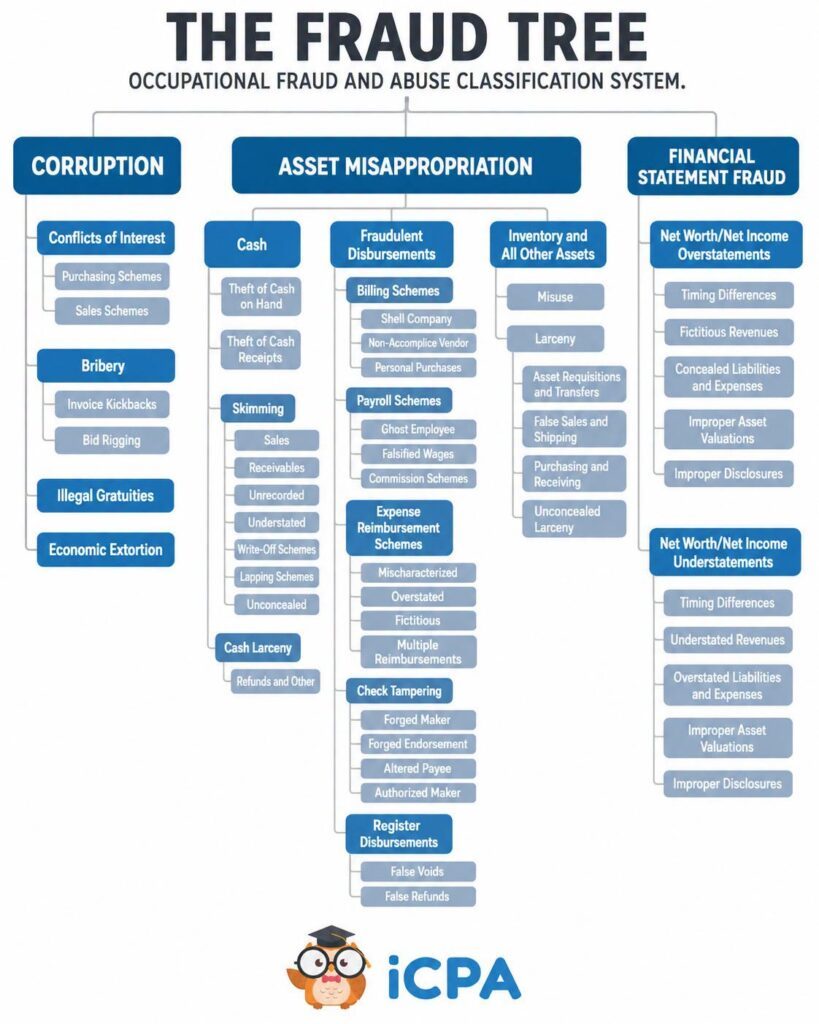
The Fraud Tree, formally called the Occupational Fraud and Abuse Classification System, organizes fraud into three main categories:
- Corruption – misuse of influence in business transactions.
- Asset Misappropriation – theft or misuse of company resources.
- Financial Statement Fraud – intentional misstatement of financial reports.
This taxonomy was developed by Joseph T. Wells and adopted by the ACFE in the 1990s. It remains the global reference framework for auditors, compliance officers, and forensic accountants.
Corruption
Corruption schemes are common in procurement and vendor dealings in the Philippines.
Examples include:
- Conflicts of interest: Employees awarding contracts to relatives or personal businesses.
- Bribery and kickbacks: Vendors paying under-the-table fees to secure contracts.
- Economic extortion: Employees demanding payments to approve transactions.
Local relevance: In government procurement and private bidding, corruption undermines trust. Firms should enforce conflict-of-interest declarations and strengthen vendor due diligence.
Asset Misappropriation
This is the most frequent type of fraud worldwide, accounting for about 90% of reported cases. It includes:
- Cash theft: Skimming receipts, refund fraud, or larceny.
- Fraudulent disbursements: Billing schemes (shell companies), payroll fraud (ghost employees), expense reimbursement abuse, and check tampering.
- Inventory theft: Unauthorized requisitions, false shipping, or outright larceny.
Philippine context: SMEs often lack strong internal controls, making them vulnerable.
Practical safeguards include:
- Surprise cash counts and reconciliations.
- Segregation of duties in payroll and disbursements.
- Expense policies with strict documentation requirements.
Financial Statement Fraud
Though less frequent (around 6% of cases), this type causes the highest financial losses. Schemes include:
- Overstatements: Fictitious revenues, concealed liabilities, inflated asset values.
- Understatements: Underreported revenues, overstated expenses.
Philippine impact: Misstated financials can mislead investors, regulators, and tax authorities. With the SEC and BIR tightening compliance, firms must ensure accurate disclosures and independent audits.
Why the Fraud Tree Matters for Account It Right Clients
- Provides a common language for fraud risks.
- Guides prevention strategies: corruption controls differ from asset theft controls.
- Supports compliance: aligns with ACFE’s Report to the Nations and Philippine regulatory expectations.
- Enhances client trust: showing proactive fraud risk management builds credibility.
Practical Steps for Philippine Businesses
- Conduct fraud risk assessments using the Fraud Tree.
- Implement whistleblower hotlines and protect anonymity.
- Rotate duties in sensitive roles (cash handling, payroll).
- Use data analytics to detect anomalies (duplicate invoices, unusual vendor payments).
- Train staff to spot red flags such as sudden lifestyle changes or reluctance to take leave.
For Account It Right and its clients, the Fraud Tree is more than an infographic—it’s a roadmap for workplace fraud prevention. By understanding corruption, asset misappropriation, and financial statement fraud, Philippine businesses can strengthen internal controls, comply with regulations, and protect their reputation in a competitive market.
Sources: Association of Certified Fraud Examiners (ACFE) | ForensicSpot