





The Bureau of Internal Revenue (BIR) has strengthened its audit program through Revenue Memorandum Order (RMO) No. 6-2026 and RMO No. 22-2026, introducing a Priority Table that ranks taxpayers for audit. This framework ensures that audits are risk-based, data-driven, and focused on areas where compliance issues are most likely to occur.
For Philippine businesses, understanding this Priority Table is essential to avoid penalties, maintain credibility, and prepare for possible scrutiny.
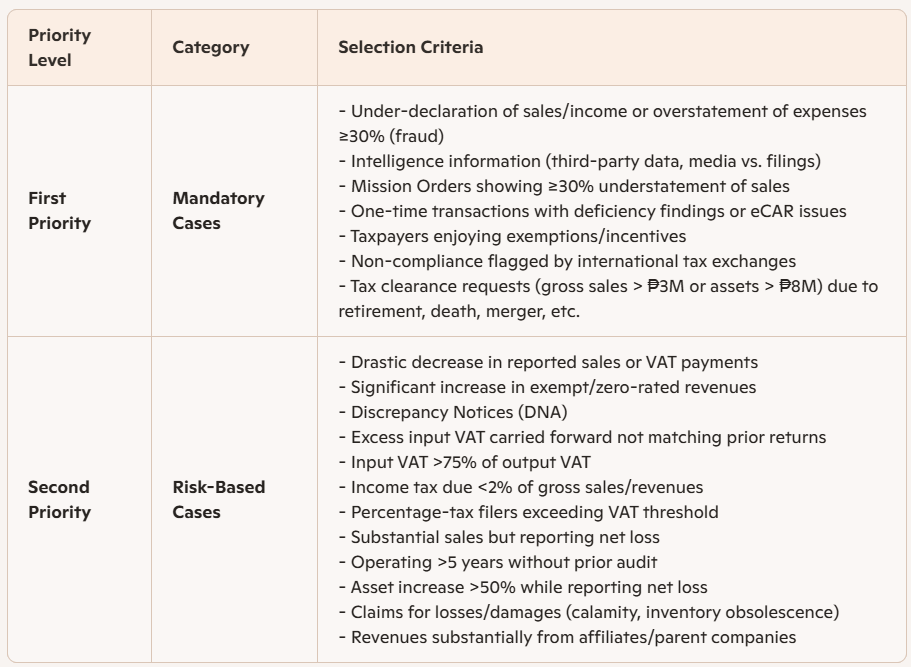
The Priority Table Explained
The Priority Table divides taxpayers into two categories: Mandatory Cases (first priority) and Priority Cases (second priority).
Implications for Philippine Businesses
The Priority Table signals a stricter, more transparent approach to tax compliance. Businesses flagged under these criteria should expect heightened scrutiny.
- SMEs and corporations with unusual tax filings are more likely to be audited.
- VAT mismatches and low effective tax rates are major red flags.
- Audit readiness is now a strategic necessity—accurate books, reconciled VAT returns, and documented exemptions are critical safeguards.
How to Prepare for Audit Readiness
To minimize risks and ensure compliance, businesses should:
- Maintain accurate books of accounts aligned with Philippine Financial Reporting Standards (PFRS).
- Reconcile VAT returns quarterly to avoid discrepancies.
- Document exemptions and incentives thoroughly to justify zero-rated or exempt sales.
- Conduct internal pre-audit reviews to catch errors early.
- Seek professional compliance support to stay updated with evolving BIR rules.
At Account It Right, we help businesses navigate the BIR’s Priority Table with confidence. Whether you fall under Mandatory or Priority Cases, our team ensures your records, filings, and compliance systems are audit-ready. Don’t wait until the BIR knocks on your door—partner with us today to secure your compliance and protect your growth.